I’ve always had a love for books. My parents always read to me before bed, took me to the library, got used books from library sales and let us order from the ever popular school book order forms so we’d always have something new and fun to read. With the consistent exposure to new worlds through books, two older sisters that always made me the student when playing school, as well as a love for Sesame Street, I learned to read at an early age. As with most avid readers, a large vocabulary follows. Because of my exposure to new words, combined with my ability to remember details in an uncanny way, spelling was a strong suit for me as well. I was eager to learn, and with a mind like a sponge soaking up each tidbit that came my way, I flourished.
Writing came relatively easy for me because of my reading ability coupled with a vivid imagination, but my true love in school was math and puzzle solving. Any thing that required the mind to put things in order with an outcome that had to be precise drew me in and left me wanting more. Being a competitive person, I loved when we had contests in school and even by myself, I would strive to do something better over and over. I was in competition with myself at all times. I wanted to run or swim faster, break records, get 100% on my work and be at the top, not to show off, but to prove to myself that I could do it. I just loved to compete. Years down the road that fight and love for puzzle solving would prove to be more beneficial to me than I would ever know.
It was December 2002, and after being moved to my hospital room after major surgery, my nurse did a scant evaluation and left me in the room with my husband. Despite being given two drugs for my extreme pain, both of which suppress the respiratory system, I was not monitored in any way or given the continuous supplemental oxygen the doctor had ordered. While my husband didn’t know I was to have supplemental oxygen, gratefully he was by my side because thirty minutes after my arrival to the floor he saw me turn gray and stiffen. When he couldn’t get me to respond, he ran out and called for a nurse. I was in respiratory arrest, found without a pulse when the code blue team arrived and had 3 grand mal seizures in an hour. Lack of oxygen to the brain caused brain damage and what doctors thought were seizures, but they couldn’t catch one while testing. Only other abnormalities showed up that could be interpreted as seizures.
It took more than five years, dozens of doctors, including those at the well-known hospitals with big reputations, countless doctor appointments, tests, and trying medication after medication, to receive the answer for the damage that was done that day. Thanks to a new doctor in our town by the name of Dr. George Ringholz, I would finally be on the right path. After reviewing my records and examining me, he told me more about my condition in 10 minutes than I’d been told in five years. While it took months to get me stabilized because of my complicated injury, he was giving me answers no one else had. He truly saved my life.
He told me that the right side of my brain doesn’t receive enough blood flow, and thus oxygen, all of the time and I can have seizures in that area of the brain. (Fortunately those have been under control with medication.) It also means that I have minimal use of the right side of the brain, which causes the left side to do most of the work. When either or both sides have had enough, my brain slows to an abnormal level.
While I seem to be able to function at a normal level to most people, those who know me best have seen the tremendous difference in my mental abilities and can tell when my mind has had enough. It’s easily overwhelmed. An array of things can cause this problem such as sensory overload, crowds, conversation, reading too much, fluorescent or blinking lights, exercise and working too long without a break, to name just a few. I’m the one who can help myself the best, and I continue to learn just how to do that to improve my quality of life. Gratefully, my puzzle solving and organizational abilities were so strong prior to my injury that despite the brain damage, those skills have helped me survive in the world I now live in. To help me even further, I’ve had wonderful therapists who have helped me learn how to compensate for the areas I struggle with.
The road has not been easy and experience has played a large role in gaining knowledge of my abilities and limitations. I’ve learned I have to take life at my pace and within my limits. For example, it took months for me to be able to read again. I could read a little, but I didn't recognize familiar words for months and even years. I still don’t recognize words at times and my spelling, which used to be excellent and easy, is now extremely difficult and poor. When the mind can't recognize a word visually, it goes phonetically, but even then, words don’t always make sense to me and I have to ask for help, move on and hope it comes to me, or be ok that I just don’t get it. The same is true in conversation. My mind can’t process the world around me as quickly as it comes a lot of times. I may still be processing the first thing someone says while they’re 3-4 sentences beyond that. When I speak, I frequently can’t find words, even simple ones at times, and can easily forget what I was saying.
A couple of months after this accident happened, I tried to read a short chapter in a book. I wound up passing out and sleeping for hours. When my husband came home, he asked me what happened because I had the same look on my face and glaze over my eyes that he saw in the hospital. It wasn't the first time and it definitely wasn't the last. Until Dr. Ringholz, no one could tell me if what I was going through was my mind still recovering or continuing to have problems. The latter was definitely the case. Eager to read, though, I started with children's books and moved on to young reader short chapter books with large text and simple plots and kept climbing up the ladder. To this day, I can't read small print without my mind giving out very shortly after starting to read. I read books with simple plots and minimal characters and sitting through any length of speech, lecture, sermon, etc. will cause my mind to shut down. When I'm at a large event, such as a sporting event, graduation, etc. I have to sit where there's minimal noise, it's easy to follow the action and I never go without wearing my earplugs.
It’s taken a long time, but I’ve learned to truly take joy in what I can do without guilt plaguing me about what I can’t. Being able to read a chapter book, even if it’s written for elementary school children is exciting and accomplishing every time. Being able to work my way up to completing a jigsaw puzzle with 500 pieces caused my heart to overflow with joy. I sat and cried when I finished it. It didn’t matter how long it took me, or how big the pieces needed to be. I did it! I did it! Life has been and will continue to be a series of milestones.
A huge milestone that I was thrilled to conquer was writing a children’s book. My husband and I had tossed around the idea of doing so years before, but I found that my writing sat. I just couldn’t find the words. I wasn’t looking for it to be published; I just wanted the satisfaction of reaching that goal.
In the spring of 2006, after 3 ½ years of struggling, my mind gave out. My husband sent Emma (our only dog at the time) and me on a trip to the beach for time to let my mind rest, then rest some more. It took at least two weeks of just resting and sleeping before I could even attempt to read a book or watch a movie. I had brought my writing with me “just in case.” Little did I know that a flurry of creativity would come to me there and after seven glorious weeks at the beach, the result was my book titled, I Love You More Than Rainbows that was published by Thomas Nelson and released in January 2008. It was an incredible gift from God and I hope that this first book is just one of many readers will enjoy.
Through I Love You More Than Rainbows, I’ve been able to share my life long love for books and now my love for writing, with both children and adults by going to schools, libraries, bookstores and being online. It’s very rewarding and to see a child get excited about reading or a parent spend quality time with their child because of my book is a feeling beyond words.
Each person has his or her own trials to face and obstacles to overcome. Sometimes what we have to offer isn’t what we originally dreamed or planned, but we can make a tremendous difference in someone’s life by giving each day the best we have. May each of you have the courage and strength to overcome the trials you face and may you be an encouragement to those going through them.
http://www.susancrites.com/
http://www.operationrainbows.com/
www.facebook.com/authorsusanecrites
www.facebook.com/iloveyoumorethanrainbows
2009 Mom’s Choice Gold Seal Award Winner
 Conference keynote speaker and Quicken Loans CEO Dan Gilbert encouraged the crowd to think like entrepreneurs and to help revitalize America’s core cities. By attacking the growing literacy crisis in public schools throughout the country with quick and effective evidence-based technologies, Teach the World to Read will play an important role in the turn-around by helping Every Child master the single most important skill for citizens of the 21st century.
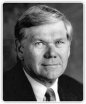 “The puzzle is solved. Learning to read is the only cure for all of the problems illiteracy
 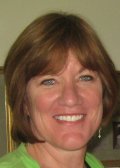 “We are now able to help every student reach their highest potential in learning to read,


